
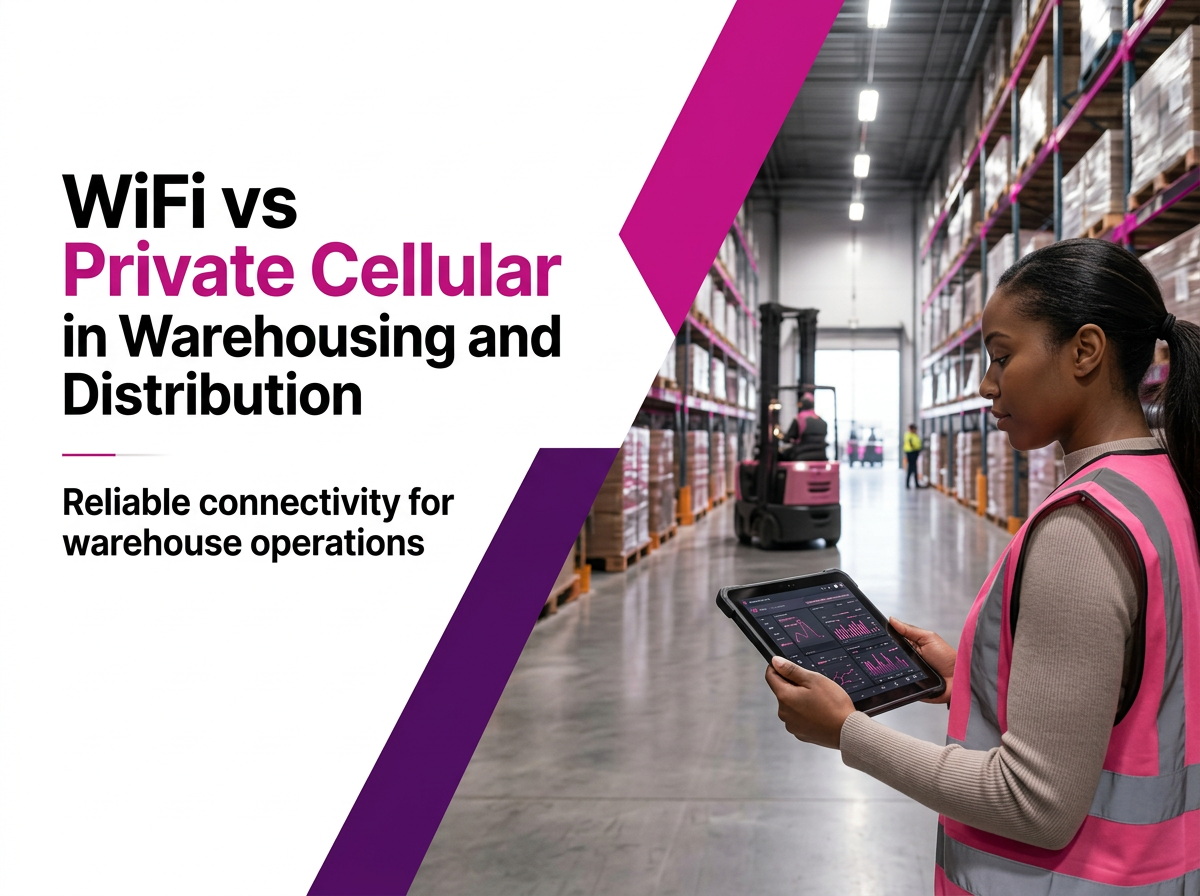
WiFi vs Private Cellular
In
Warehousing and Distribution
Warehousing and distribution operations run on speed and accuracy. Every scan, pick, and inventory move depends on reliable wireless connectivity. When devices cannot connect productivity slows down, exceptions increase, and the cost shows up in labor and throughput.
Connectivity That Drives Productivity
In modern warehouses and distribution centers, wireless networks support inventory systems, asset tracking, worker mobility, and increasingly autonomous equipment. Scanners, handhelds, tablets, and mobile workstations are only as effective as the network behind them. If connectivity is inconsistent, productivity becomes inconsistent.
Why WiFi Matters and Where It Struggles
WiFi is the familiar default for many facilities. It is flexible, widely supported, and cost effective for general connectivity. However, large footprints and demanding operational workflows can expose limitations, especially when coverage, interference, and roaming behavior affect scanning performance.
Scanning delays add up quickly
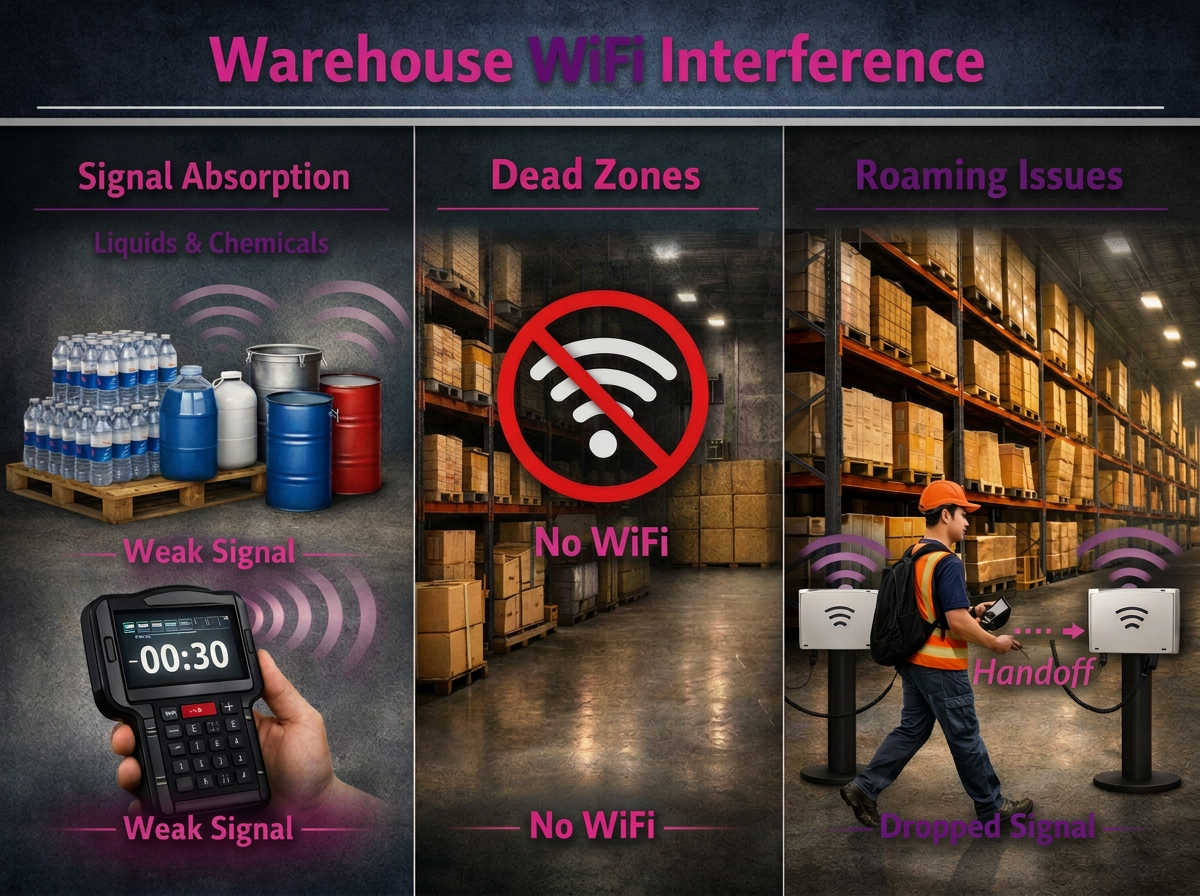
A scan that takes 30 seconds instead of 10 may not seem severe in isolation. Across hundreds of scans per shift and multiple teams, small delays compound into lost hours and missed throughput targets.
Environmental interference is everywhere
Warehouses contain materials and layouts that degrade WiFi signal quality and consistency.
Liquids absorb signal, weakening coverage near beverages, chemicals, and refrigerated inventory.
Metal reflects signal, creating dead zones around racking, machinery, and dense shelving.
High ceilings, long aisles, and constantly shifting inventory create changing RF conditions that are difficult for WiFi to manage without careful design and frequent tuning.
Roaming issues slow workers down
As employees move, devices roam between access points. Each handoff adds overhead and increases the chance of delay, packet loss, or a temporary disconnect—especially in high-traffic areas or where coverage overlaps are uneven.
When WiFi performance drops, the impact is immediate on the floor and measurable in operational cost.
Private Cellular The Next Evolution of Warehouse Connectivity
Private cellular networks, such as Private LTE and Private 5G, are increasingly used in large, complex facilities that need predictable performance. They provide carrier grade reliability while keeping the network under your control, without relying on public carrier infrastructure for onsite operations.
Continuous coverage with fewer gaps
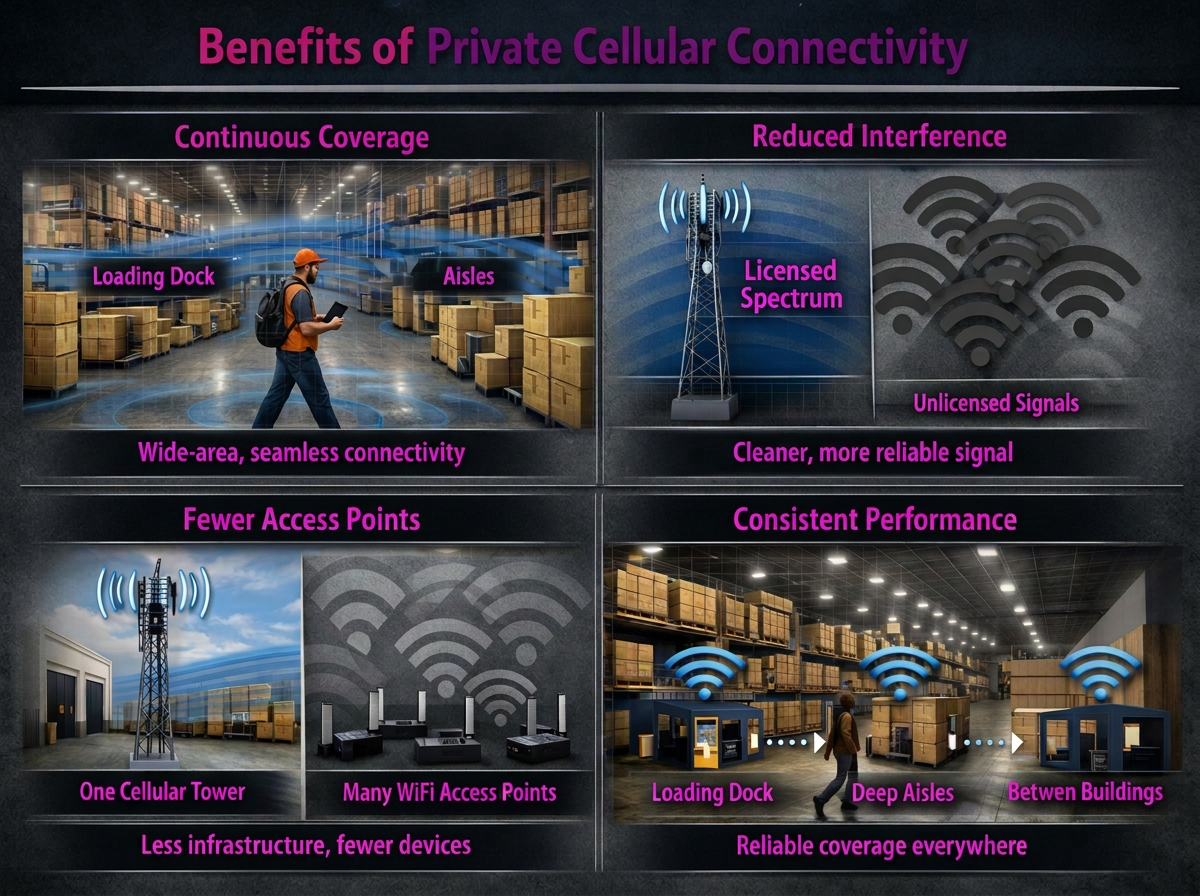
Private cellular is designed for wide-area coverage. Devices can maintain sessions across larger areas without frequent handoffs, reducing a common source of scanning delays and dropped connections.
Reduced interference
Cellular deployments can use licensed or lightly licensed spectrum, which typically means cleaner airspace and fewer competing signals. More structured access to the spectrum helps keep performance stable as device counts and traffic increases.
Fewer access points required
A single cellular radio can often cover areas that would require multiple WiFi access points. That can reduce hardware density, simplify cabling and mounting, and lower ongoing maintenance overhead.
Consistent performance across the facility
From loading docks to deep aisles and even between buildings private cellular is built to deliver predictable connectivity for mobile workflows and mission-critical scanning.
Key Advantages Over WiFi
The Bottom Line: Connectivity is a Business Decision
Warehouses depend on speed, accuracy, and uptime. When connectivity slows down, everything slows down: workers, workflows, and ultimately revenue.
WiFi still has a strong role, particularly in smaller facilities or areas with lower interference and less mobility pressure. But in large distribution centers, high density scanning environments, and operations where downtime is costly, private cellular can provide the reliability and consistency that WiFi often struggles to sustain at scale.
Investing in stronger connectivity is not just an IT upgrade. It is a strategic decision to protect productivity, reduce operational friction, and keep the facility performing at full speed.